
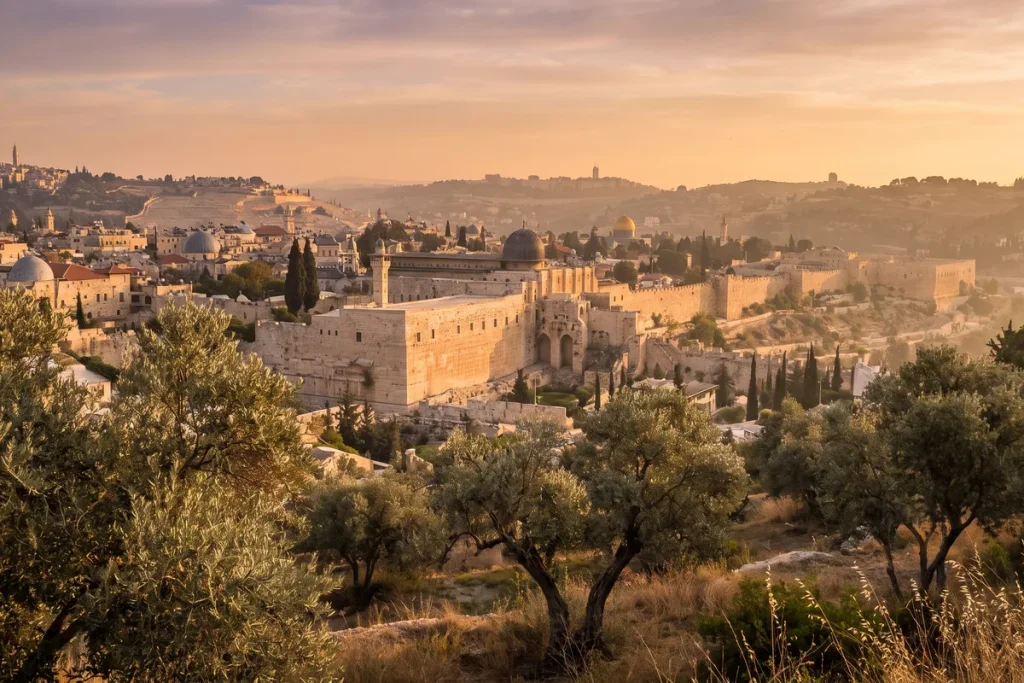
A practical, independent guide to designing a private trip to Israel — how the touring styles compare, what a great itinerary looks like, what it costs, and how to choose the operator and guide who will get it right.
To plan a private tour of Israel, start by fixing three things: how many days you have, the regions that matter most to you (Jerusalem, the Dead Sea and Masada, the Galilee, Tel Aviv, the Negev), and your touring style — private, small-group or self-drive. Then choose a licensed operator who builds a custom day-by-day itinerary around your interests and pace, rather than slotting you into a fixed coach route.
Why a private tour of Israel works
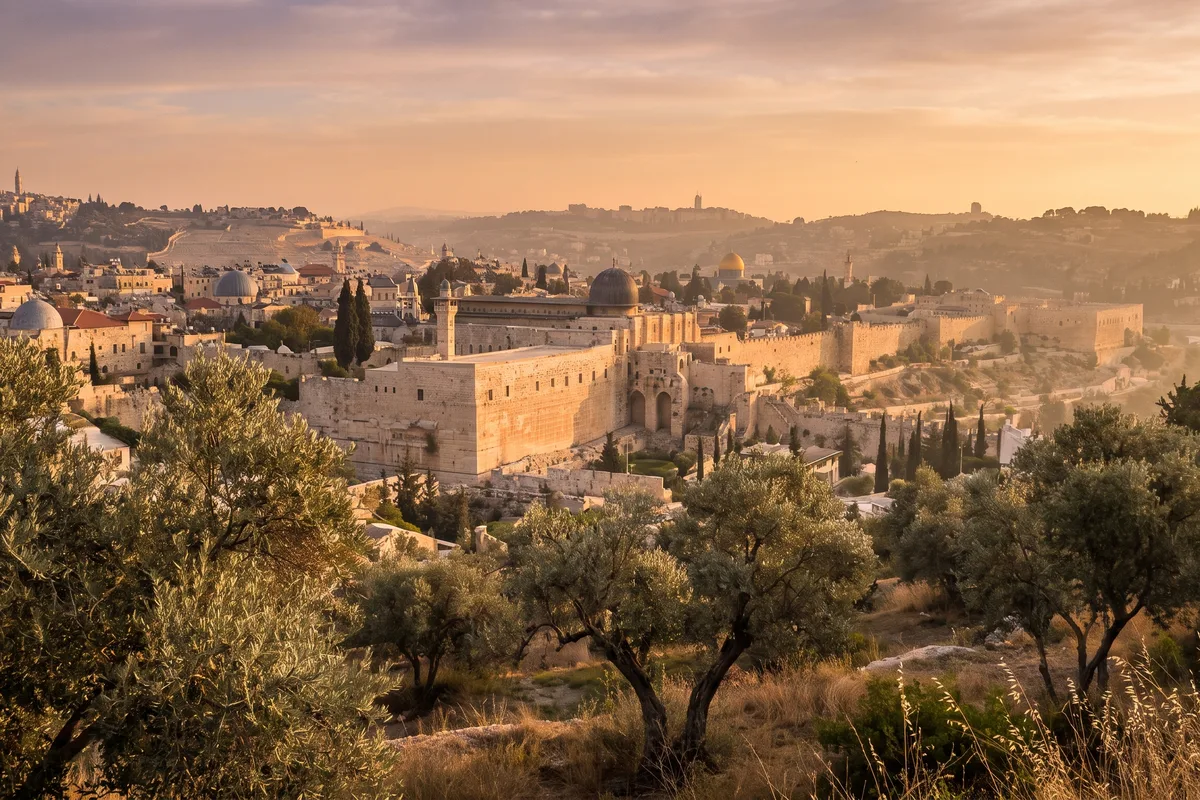
Israel packs an extraordinary amount into a country roughly the size of New Jersey. Within a couple of hours’ drive you can move from the ancient limestone alleys of Jerusalem to float in the Dead Sea, climb Masada at dawn, taste your way through Tel Aviv, or stand on the Sea of Galilee. That density is exactly why a private tour pays off: a licensed guide and a flexible itinerary let you cover ground efficiently without surrendering depth.
The numbers tell the story of how much there is to see. Israel is home to nine UNESCO World Heritage Sites, from the Old City of Jerusalem and the desert fortress of Masada to the White City of Tel Aviv and the Bahá’í terraces in Haifa (UNESCO World Heritage List). The Dead Sea, about 430 metres below sea level, is the lowest point on dry land anywhere on the planet. A private trip lets you build a route that connects the sites you care about, at a pace that suits your group.
“The single biggest factor in how much you enjoy Israel is not the hotel or the route — it’s the guide. A great licensed guide turns a list of sites into a story you actually remember.” — Rachel Mazor, Travel Editor
Private vs. small-group vs. self-drive: which is right for you?
There is no single “best” way to see Israel — only the way that fits your group, your budget and how much control you want over the day. Here is how the three common touring styles compare, and who each one suits.
| Touring style | Who it’s best for (and a rough day cost) |
|---|---|
| Private day tour with a licensed guide | Couples, families and small groups who want a custom route, door-to-door pickup and the freedom to linger. Typically the most rewarding option; expect roughly $450 to $900 per day for the vehicle and guide, shared across your group. |
| Small-group scheduled tour | Solo travellers and budget-conscious visitors happy to follow a fixed itinerary with strangers. Lower per-person cost (often $90 to $180 per day) but little flexibility on timing or stops. |
| Self-drive with a rental car | Independent travellers comfortable navigating, parking and researching each site themselves. Cheapest on paper, but you lose the guide’s context and local know-how, and city parking can be stressful. |
| Shore excursion (cruise passengers) | Visitors arriving by ship at Haifa or Ashdod with one day ashore. A private guide is almost essential here to maximise a tight, fixed window and guarantee a timely return to port. |
For most international visitors making a once-in-a-lifetime trip, a private tour hits the sweet spot: the cost is very reasonable when split across a family or group of friends, and the day flexes around you rather than the other way round.
What a great Israel private-tour itinerary looks like
A strong itinerary is built around regions, not a checklist of disconnected landmarks. Most well-designed private trips group sites geographically so you spend your time exploring rather than sitting in the car. These are the building blocks a good operator will mix to your taste:
- Jerusalem (1–2 days): the Old City quarters, the Western Wall, the Mount of Olives, Yad Vashem and the vibrant Mahane Yehuda market — ideally with an early start to beat the crowds and the heat.
- Dead Sea & Masada (1 day): a sunrise climb or cable car up Masada, the desert oasis of Ein Gedi, and an afternoon float in the mineral-rich Dead Sea.
- Galilee & the North (1–2 days): the Sea of Galilee, Nazareth, Safed’s artists’ quarter, the Golan Heights and lush hiking trails — a complete change of scenery from the desert.
- Tel Aviv & Jaffa (1 day): Bauhaus architecture in the White City, the ancient port of Jaffa, beaches and one of the Mediterranean’s best food scenes.
- The Negev & Eilat (1–2 days): the Ramon Crater, desert landscapes, and Red Sea snorkelling in the far south for travellers with more time.
How to choose a private-tour operator in Israel
The operator you book makes or breaks the trip. Israel does not have a shortage of companies offering “private tours”, so the real task is separating a genuine custom operator from a repackaged group route. Use this checklist before you pay a deposit:
- Licensed guides. Israel licenses its tour guides through the Ministry of Tourism after a rigorous two-year course. Insist on a licensed guide — it is the clearest quality signal there is.
- A genuinely custom itinerary. The operator should build the day around your interests, fitness and pace, not hand you a fixed coach route with a “private” label.
- Flexibility on the day. Good private touring means you can linger at a site you love or skip one that doesn’t grab you. Ask how changes are handled mid-trip.
- Transparent pricing. A clear quote that states what’s included (vehicle, guide, entrance fees, pickup points) protects you from surprises.
- Real reviews and local depth. Look for consistent, recent reviews and a team that actually lives the destinations — local knowledge is what turns a good day into a great one.
Specialist operators such as Israel Private Tours are built around exactly this model: licensed guides, door-to-door private vehicles, and day-by-day itineraries planned around each traveller rather than a fixed schedule. Whoever you choose, the checklist above is the fastest way to tell a true custom operator from a mass-market one. For a deeper look at the case for going private, see our companion guide, 10 reasons to book a private tour.
What does a private tour of Israel cost in 2026?
Private touring is priced per day for the vehicle and guide, not per person, which is why it becomes very competitive once the cost is shared across a family or a group of friends. As a 2026 planning benchmark, a private full-day tour with a licensed guide and air-conditioned vehicle typically runs from about $450 to $900 per day, depending on group size, vehicle, season and the distances covered.
To put that in context: a couple paying $700 for a private day is spending $350 each — only a little more than a fixed small-group seat, but with a guide, a car and an itinerary entirely their own. Split across a family of four, the same day works out far cheaper per head than four group seats. Entrance fees, meals and tips are usually extra, so ask for an all-in estimate when you compare quotes.
When to go
Israel is a year-round destination, but spring (March to May) and autumn (September to November) are the sweet spots: warm, dry days that are ideal for walking Jerusalem, hiking the Galilee and exploring the desert in comfort. Summer (June to August) is hot, especially around the Dead Sea and the Negev, so private touring — with an air-conditioned vehicle and early starts — is particularly worth it. Winter (December to February) is mild and green in the north and rarely freezing, and it brings the fewest crowds. Whenever you come, building the day around the heat and the light is something a good local guide does instinctively.
For official destination information and entry guidance, Israel’s Ministry of Tourism publishes up-to-date details at info.goisrael.com, and you can browse the country’s UNESCO-listed sites on the UNESCO World Heritage List.
Frequently asked questions
How many days do I need for a private tour of Israel?
Most visitors get a satisfying trip in 5 to 7 days, which is enough to cover Jerusalem, the Dead Sea and Masada, the Galilee and Tel Aviv at a comfortable pace. With 3 to 4 days you can still see the highlights around Jerusalem and the Dead Sea, while 10 days or more lets you add the Negev, Eilat and slower exploration of the north.
Is a private tour of Israel worth the extra cost over a group tour?
For two or more travellers it usually is. Because private touring is priced per day for the vehicle and guide rather than per person, the cost per head drops quickly as your group grows, while you gain a custom itinerary, door-to-door pickup and the freedom to set the pace. Solo travellers on a tight budget may still prefer a scheduled small-group tour.
Do I need a licensed guide, and what difference does it make?
Yes, insist on one. Israel licenses tour guides through the Ministry of Tourism after a demanding two-year course, so a licensed guide brings verified historical, religious and cultural expertise. It is the single clearest quality signal when you compare operators, and it is what turns a list of sites into a coherent, memorable story.
Is it safe to travel in Israel right now?
Conditions can change, so check your government’s current travel advice and your operator’s guidance before and during your trip. A reputable local operator monitors the situation daily and will adjust the itinerary as needed, which is one practical advantage of touring privately with a company that knows the ground.
Can a private tour be customised to my interests?
That is the whole point of going private. A genuine custom operator builds the itinerary around what matters to you, whether that is religious heritage, archaeology, food and markets, hiking and nature, or a relaxed pace with children. Be wary of any company that offers only a fixed route under a private label.
What is the best time of year for a private tour of Israel?
Spring (March to May) and autumn (September to November) offer the most comfortable weather for sightseeing and hiking. Summer is hot, particularly in the desert and at the Dead Sea, so an air-conditioned private vehicle and early starts help a great deal. Winter is mild, green in the north and the least crowded time to visit.

Rachel Mazor
Rachel researches and compares private tour operators, licensed guides and day-trip experiences across Israel, and writes practical guides that help visitors choose the right company for their trip.
Plan a trip that’s actually yours
Use the checklist above to compare operators, then build the itinerary around the regions and pace that suit your group. A licensed guide and a flexible day are what make Israel unforgettable.
Review the operator checklist


